Menu
Menu

When to Upgrade Your Rooflight (and How It Enhances Your Home)

Rooflights are a brilliant way to bring natural light into your home. Like any quality feature, they perform best when they’re well maintained and up to modern standards. Many homeowners only start thinking about their rooflight when something changes, such as increased energy use or reduced clarity. Recognising these moments early creates an opportunity for a smooth, well-planned upgrade rather than a reactive fix.

As a valuable part of your home, a rooflight deserves the same thoughtful attention as any major building element. Knowing when to upgrade, rather than continually maintain, can improve comfort, boost efficiency, and help protect your home for years to come. This guide highlights what to look for and how a modern rooflight can elevate your living space.

How Long Can a Rooflight Perform at Its Best?

A well-designed, properly maintained rooflight can deliver strong performance for 20 to 30 years. However, longevity isn’t just about age, it’s about how well the unit continues to perform.

Some rooflights remain effective for decades, while others may benefit from an earlier upgrade to take advantage of advancements in energy efficiency, safety, and design. Even if an older unit is still functioning, upgrading can unlock noticeable improvements in comfort, light quality, and overall performance.

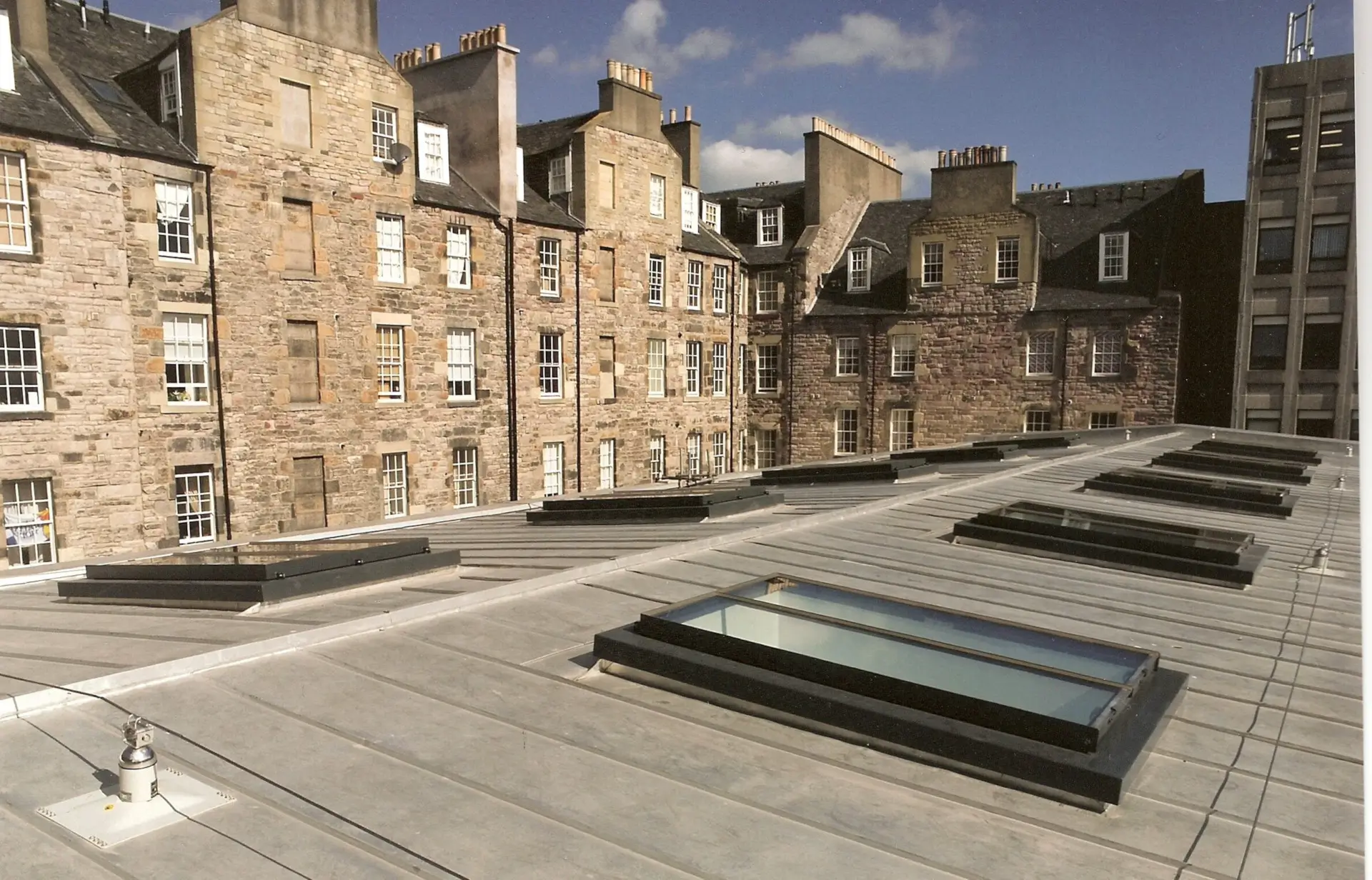
External view of Royal College of Surgeons showing surrounding buildings and Conservation Plateau Rooflights - Helpful Guides: Flat Rooflight Buying Guide. Flat Roof Collection

Signs Your Rooflights May Need Replacing

Ongoing Moisture Around the Rooflight

Occasional maintenance is normal, but if you’re repeatedly addressing moisture in the same area, it may be a sign that your rooflight would benefit from a fresh start. A new, well-installed unit can provide long-term reliability and peace of mind.

Reduced Clarity Between Glass Panes

If your rooflight no longer delivers the clear, bright light it once did, it may be time to consider an upgrade. Modern glazing technology ensures excellent clarity while improving insulation and reducing the likelihood of internal condensation.

Changes in Glazing Appearance

Older materials can gradually lose their original clarity or strength over time, particularly if they are made from materials like Polycarbonate. Today’s rooflights use durable glass leaf that maintain their appearance and performance for longer. This keeps your space bright, clean, and visually appealing.

Lower Energy Efficiency

If you have noticed your space feels less comfortable or your energy use has increased, a modern rooflight can make a meaningful difference. New designs feature high-performance glazing and thermally efficient frames that help maintain indoor temperatures and reduce energy costs. The performance of the frame design is just as important as the performance of the glazing, so choosing the right rooflight provider who can provide the whole unit-value of the rooflight rather than just the centre pane value, will make all the difference.

Less Smooth Operation

If your rooflight is no longer as easy to open or adjust, upgrading can restore ease of use. Modern systems are designed for smooth, reliable operation, enhancing everyday convenience. Remember, motors need to be used regularly for them to stand the test of time. Opening your rooflights fortnightly keeps the motors in action and working for longer.

Frame Wear Over Time

Natural wear is part of any long-term installation, but a new rooflight brings renewed structural integrity along with updated design and performance benefits. Steel rooflight frames stand the test of time, especially with dual-layer polyester powder coating to protect the frame from the elements.

Repair vs. Replace: How to Decide

A simple framework for making the call:

  • Single issue (worn seal, faulty handle, minor flashing problem) – likely repairable
  • Multiple issues occurring together, or glazing failure – replacement is usually more cost-effective
  • Unit over 20 years old – replacement is worth serious consideration even if it still appears functional

If you are in any doubt, consulting a rooflight specialist before committing to either route is the right move. A specialist can assess whether repair is genuinely viable or whether you would be spending money on a unit that is fundamentally past its best.

Why Upgrading to a Modern Rooflight Is Worth It

Replacement shouldn’t only be viewed as something you’re forced into. It’s also a genuine opportunity to improve your home.

Energy Efficiency Gains

Modern rooflights with low-E glass coatings, argon-filled double glazing, and thermally broken aluminium frames can dramatically reduce heat loss compared to older units. This matters both for comfort and for compliance. Under current building regulations (Part L), replacement rooflights must meet minimum U-value requirements – and a modern, well-specified unit will meet or exceed these standards as standard.

Improved Safety

Modern laminated glass options are designed to meet Class B or higher ratings, offering significantly better protection than older glazing types.

Better Light and Aesthetics

New glazing technologies offer better light transmission than aged polycarbonate or old double-glazed units that have started to dull. Couple that with sleeker, slimmer frame profiles – available in a range of RAL colours – and a replacement rooflight can make a noticeable visual difference to the space below, both in terms of light quality and appearance.

Increased Property Value

Energy-efficient, well-specified rooflights are an asset when it comes to selling. For flat roof extensions and loft conversions in particular, a quality rooflight is a selling point that buyers notice – and an outdated, underperforming unit can work against you just as readily.

What to Consider When Specifying a Replacement Rooflight

Once you’ve decided to replace, getting the specification right from the outset avoids delays and costly changes later. Key things to consider include the size and kerb height of the existing opening, glazing specification (double vs. triple, low-E coating, solar control options), frame material and thermal performance, whether you need an opening unit for ventilation, safety requirements for the roof, lead times, and compliance with current building regulations.

The Case for Steel: Built to Last

Not all rooflights are made equal when it comes to materials. Steel-framed rooflights offer a level of robustness and longevity that aluminium or uPVC alternatives simply cannot match. Steel is inherently stronger, meaning slimmer sight lines are possible without compromising structural integrity. It is also more resistant to warping, twisting, and long-term frame deterioration – making it an outstanding choice for homeowners and specifiers who want a rooflight that genuinely stands the test of time. The Rooflight Co.’s steel range is designed and manufactured to deliver exactly that.

The earlier you bring a specialist into the conversation, the better. The Rooflight Co. team can advise on all of these considerations and help you arrive at the right specification for your project and budget.

FAQs: Replacing Your Rooflight

Can I replace just the glass in my rooflight?

While it may be tempting to replace only the glazing unit, we recommend upgrading the entire rooflight to ensure you benefit from a fully integrated, thermally optimised, and structurally sound solution.

How do I know if my rooflight meets current building regulations?

If your rooflight is more than 15 to 20 years old, it is unlikely to meet current Part L requirements for thermal performance. Rooflight building regulations Part L compliance is the clearest measure to apply – and replacement is the most straightforward route to meeting it, particularly if you are carrying out other building works at the same time.

How long does a rooflight replacement take?

For a straightforward like-for-like replacement, installation is typically completed in a single day. More complex projects – those requiring changes to the kerb, upstand, or structural opening – will take longer, and it’s worth factoring in lead times when planning the works.

Will replacing my rooflight require planning permission?

In most cases, a like-for-like replacement does not require planning permission. However, listed buildings and properties within conservation areas may have specific restrictions. Always check with your local planning authority if there is any uncertainty.

What’s the difference between repairing and replacing a rooflight?

Repairs address specific, isolated failures – a worn seal, a faulty hinge, a damaged flashing. Replacement is appropriate when the unit has reached end of life, when multiple issues are occurring together, or when you want to upgrade performance and compliance. A specialist assessment will quickly clarify which route is right for your situation.

Thinking About Replacing Your Rooflight?

Whether you’re a homeowner noticing the early signs of failure or a contractor specifying a replacement, choosing the right rooflight makes all the difference. The Rooflight Co. team can help you find the right unit for your opening, glazing requirements and budget – with expert advice on materials, energy performance and installation.

Get in touch with The Rooflight Co. to discuss your project or request a quote.

Share on Social Media

Other Articles For You

Understanding Building Regulations for Rooflights: A Guide to Approved Documents F, K, L and O

When to Upgrade Your Rooflight (and How It Enhances Your Home)

FMB Survey Shows Why Rooflight Choice Matters in the Planning Process

The Rooflight Co. & Nicholsons Rooted In Light Series: Part 3 – Our Vision

The Rooflight Co. & Nicholsons Rooted In Light Series: Part 2 – Healthy Spaces

Standard vs Recessed Rooflight Installation: Understanding the Difference

Homeowners and Self-Builders - Neo rooflights flood a living area with natural light - Homeowner Hub. Helpful Guides: A Guide to Pitched Roof Windows

The Rooflight Co. & Nicholsons Rooted In Light Series: Part 1 – Why Daylight Matters

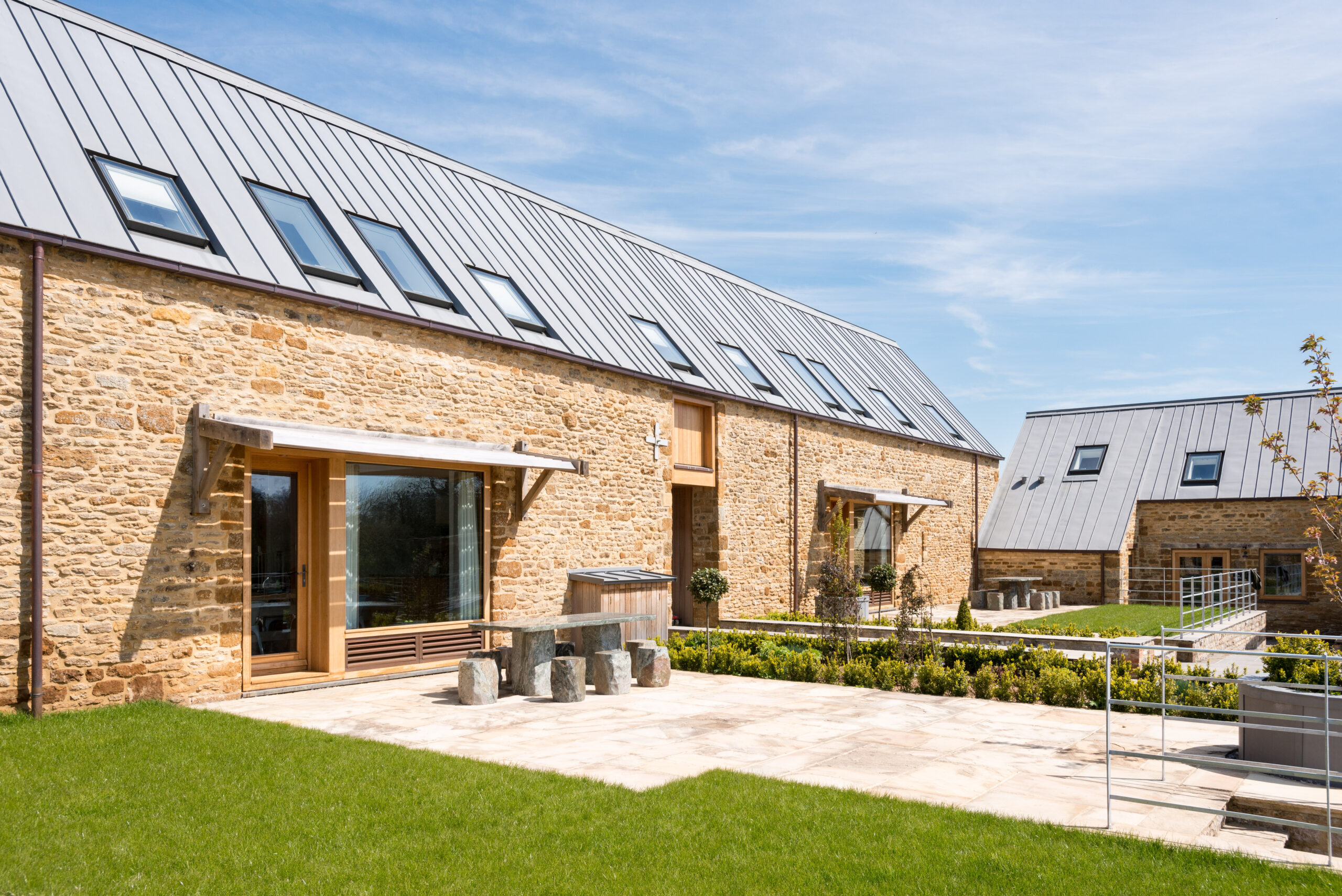
Courtyard view of Tew Farmhouse and Barns for the What Size Rooflight Do I Need? Blog - Contractor Hub header. Helpful Guides: What size of rooflight do I need?

Beyond the Landscape: How Neighbour Impact Can Affect Your Planning Permission

Talk To Our Technical Experts

Send us your details and our team will be in touch. 

TLC Logo June 2023-Solid Black

Connect With Our Technical Experts

TLC Logo June 2023-Solid Black

Register Your Product

Our standard terms and conditions of sale provide a warranty of 12 months from date of delivery. We recommend you register your products within this timeframe to extend your warranty, where applicable.

If you have more than one rooflight from The Rooflight Co, please enter all serial numbers below:
?
Serial number label found either:-
  • On the back of the O&M booklet supplied with the rooflight.
  • There is a sticker within the channel of the underside of the casement, visible when the casement is open OR Open the rooflight and the sticker will be located in an area that can't be seen when the rooflight is closed.
  • There is a sticker within the thermoliner channel (Channel on the baseplate), visible when the casement is open OR Open the rooflight and the sticker will be located in an area that can't be seen when the rooflight is closed.
TLC Logo June 2023-Solid Black

Education & CPD Requests

Select All That Apply